Long before written records
Indigenous peoples of the Great Lakes and neighboring waters gathered, processed, exchanged, and cared for wild rice. Archaeology can document plant use, but it does not set the beginning of those relationships.
Heritage profileGreat Lakes
Zizania palustris · manoomin
The grain at a glance
“A food that grows on water—and a living relative, not merely a commodity.”
Origin & waterscape
Northern wild rice is an annual aquatic grass native across much of temperate North America. It thrives in shallow lakes, slow rivers, and wetlands where water depth, flow, sediment, and seasonal conditions align.
This profile centers manoomin in the Great Lakes region because botanical distribution is not the same as cultural meaning. For Anishinaabe peoples, manoomin is bound to migration histories, food sovereignty, treaty rights, ceremony, kinship, and responsibilities to water.
Language atlas
Words for wild rice do more than identify a plant. They locate it within distinct languages, communities, waters, laws, foods, and responsibilities.
An Ojibwemowin name often translated as ‘the good berry.’ The word belongs within Anishinaabe language, law, food, and relationships with water—not as a decorative synonym.
A Dakota name for wild rice. Dakota relationships with this food have their own histories and should not be folded into a single pan-Indigenous account.
An English market name for seeds of Zizania species. It is not Asian rice: Zizania and Oryza are different grass genera.
A trade description sometimes used for rice growing in lakes and rivers and gathered by hand. It should remain distinct from paddy-grown, mechanically harvested wild rice.
Working chronology
Indigenous peoples of the Great Lakes and neighboring waters gathered, processed, exchanged, and cared for wild rice. Archaeology can document plant use, but it does not set the beginning of those relationships.
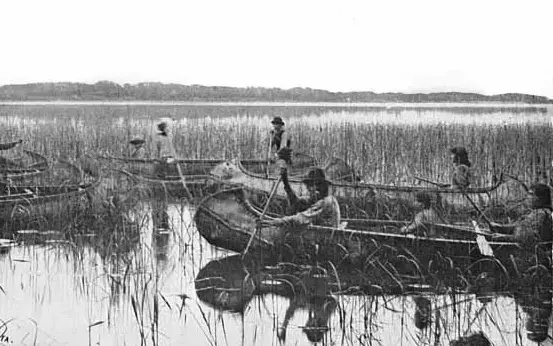
When grain is ripe, harvesters move through shallow water in canoes or small boats, bending stalks and gently knocking ripe seed. Unripe grain remains to mature; some seed falls back to the water.
Drying, parching, dancing or threshing, and winnowing remove moisture and hulls. These are skilled stages carried by families, communities, and harvest traditions.
Breeding and paddy cultivation created a commercial wild-rice industry. At the same time, Tribal Nations and intertribal organizations continue protecting natural stands, treaty rights, genetic integrity, water, and harvesting knowledge.
Living foodways
Wild rice becomes food through close attention to water, ripeness, weather, heat, hull, and community practice. The work cannot be reduced to a harvest photograph or a packaged ingredient.
A poler guides a canoe or small boat while a ricer uses light knocking sticks. Ripe grain falls into the boat; other seed returns to the bed and to birds and animals.
Fresh grain is dried and heated, then hulled by careful footwork or mechanical finishing. Technique shapes color, aroma, texture, cooking time, and storage.
Manoomin enters soups, broths, stuffings, and many family preparations, and is shared at gatherings. Contemporary dishes continue a living foodway rather than reenact a vanished past.
Material witness
Historical photography is presented as a situated record, not a complete account of Anishinaabe relationships, law, knowledge, or living stewardship.
Nutrition & evidence
Cooked wild rice provides carbohydrate, protein, fibre, minerals, and plant compounds. Composition varies among natural stands, cultivated varieties, processing methods, and preparations; nutrition data cannot substitute for cultural or ecological context.
Research trail
Last editorial review · August 2026 Read the sourcing method →
Continue exploring
