Before domestication
People gathered and managed wild rice in East Asian wetlands. Use, cultivation, and domestication are related but not interchangeable archaeological claims.
Heritage profile · 09Yangtze River basin
Oryza sativa · Asian rice
The grain at a glance
“A wetland grass transformed through generations of selection, labor, water knowledge, and daily meals.”
Origin & landscape
Asian rice is a cereal cultigen whose domestication is strongly associated with the Yangtze River basin in China. Archaeology traces changing harvesting practices, grain remains, phytoliths, and non-shattering traits; genetics reconstructs relationships among wild rice and cultivated lineages.
No single date captures this transformation. Early use, cultivation, domestication, and later diversification describe different stages. Asian rice also must not be confused with African rice, Oryza glaberrima, which has its own West African domestication history.
Language atlas
Rice languages often distinguish plant, unhusked grain, hulled grain, cooked food, meal, variety, and dish. These words reveal relationships that the English word “rice” compresses.
The broad English name covers enormous varietal, ecological, and culinary diversity. This profile focuses on Asian rice, not African rice, Oryza glaberrima.
Chinese terms distinguish the rice plant or crop from the hulled grain; vocabulary changes again for cooked rice and particular preparations.
Japanese words distinguish grain from the standing plant, while named varieties and dishes carry more precise local histories.
Korean distinguishes uncooked rice grain from cooked grain or a meal, showing why a single translation cannot hold an entire food world.
South Asian names belong to different languages and may distinguish raw grain, cooked rice, varieties, dishes, and social settings.
Working chronology
People gathered and managed wild rice in East Asian wetlands. Use, cultivation, and domestication are related but not interchangeable archaeological claims.
Archaeobotanical and genetic evidence supports a long domestication process for Asian rice in the Yangtze River basin. Researchers continue to refine its timing and stages.
Rice lineages, cultivation knowledge, tools, and cuisines developed through movement and exchange across East, Southeast, and South Asia—not through one simple dispersal arrow.
Farmers continue to maintain landraces and modern varieties across irrigated, rainfed, flood-prone, upland, terrace, and deepwater systems.
Living foodways
Rice is not one cuisine or one farming system. Grain type, water, milling, storage, heat, vessels, microbes, and social context shape thousands of distinct foods.
Absorption, steaming, boiling, and draining create different textures. Variety and desired result govern washing, soaking, water ratios, and resting.
Whole, broken, pounded, and milled rice becomes porridges, cakes, dumplings, noodles, batters, and sweets in locally specific traditions.
Rice supports breads, batters, vinegars, starters, and alcoholic drinks through microbial knowledge that differs by community, climate, and technique.
Material witness
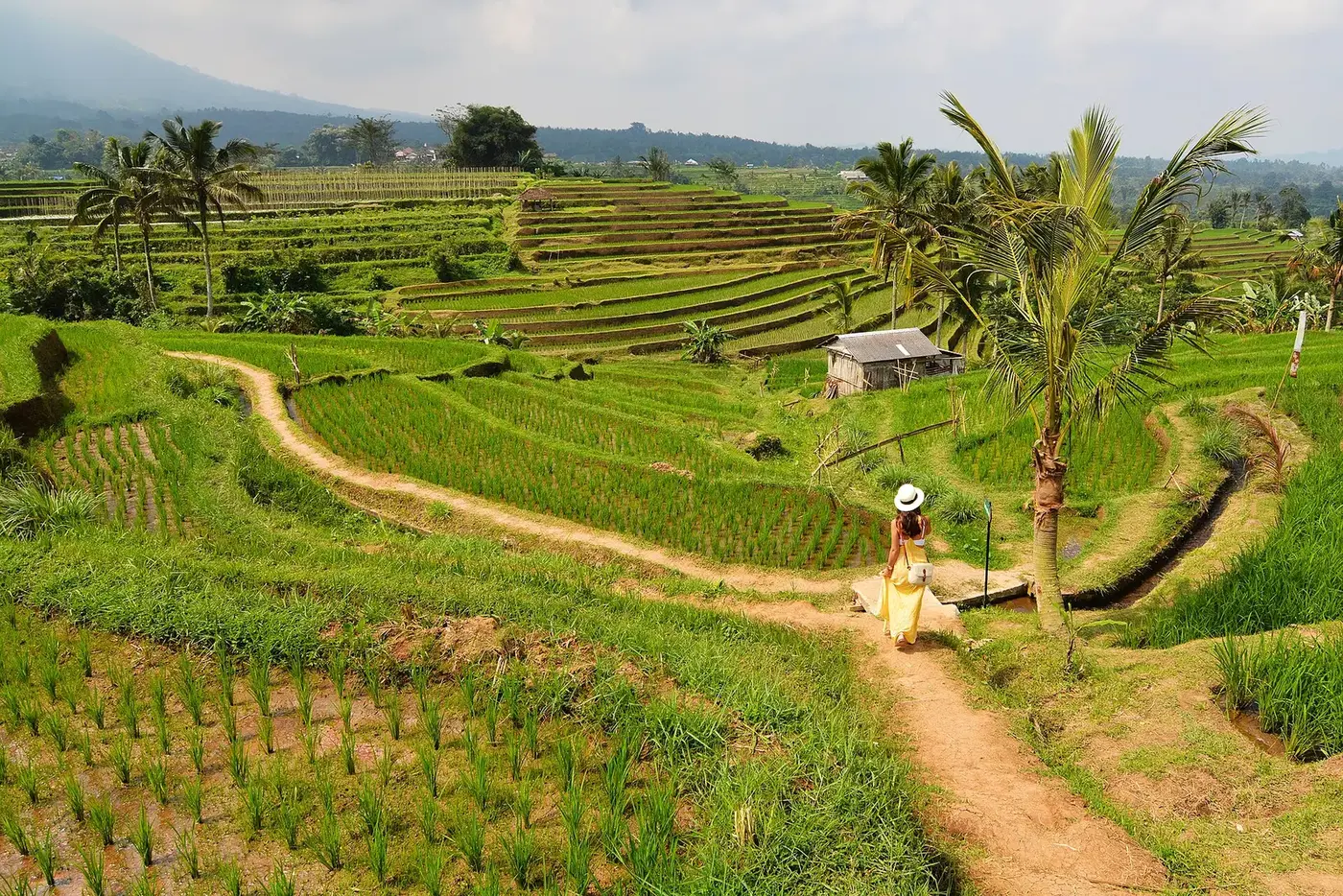
One terraced waterscape makes cultivation visible while the wider profile preserves the diversity of Asian rice ecologies and farming systems.
Nutrition & evidence
Rice primarily supplies carbohydrate, with protein and varying amounts of fibre, vitamins, minerals, and plant compounds. Brown, polished, parboiled, pigmented, and fortified rice are not nutritionally identical. Variety, milling, cooking, serving size, and the rest of the meal all matter.
Research trail
Last editorial review · August 2026 Read the sourcing method →
Continue exploring
