Before domestication
Green foxtail, Setaria viridis, is the wild progenitor. Distinguishing early gathering, cultivation, and domesticated grain requires several lines of evidence.
Heritage profile · 08Northern China
Setaria italica · cereal grass
The grain at a glance
“A small-seeded cereal shaped in northern China, then carried into many temperate food worlds.”
Origin & landscape
Foxtail millet is a warm-season cereal domesticated from green foxtail, Setaria viridis. Botanical authority recognizes it as a cultigen from China, while archaeology places its early cultivation within the developing millet systems of northern China.
Early dates are not a single moment of invention. Seed size, non-shattering, crop abundance, phytoliths, genetics, and settlement context each answer different questions. DivineGrains therefore presents domestication as a long relationship among plants, people, fields, and selection—not one exact year.
Language atlas
Foxtail millet appears in many languages, but similar ingredients do not erase local distinctions. Names are recorded as invitations to learn where, how, and by whom the grain is grown and prepared.
The English name describes the dense, bristled seed head; it should not be shortened to ‘millet’ when the species matters.
In Mandarin Chinese, a widely used name for the small grain and prepared grain; regional varieties and dishes remain more specific.
A Japanese name with deep regional histories in mixed-grain agriculture, ritual, sweets, and everyday foods.
The Korean name for foxtail millet, used in mixed-grain rice, porridges, and other locally situated preparations.
Names used in parts of South Asia; each belongs to particular languages, farming systems, and food traditions rather than one interchangeable cuisine.
Working chronology
Green foxtail, Setaria viridis, is the wild progenitor. Distinguishing early gathering, cultivation, and domesticated grain requires several lines of evidence.
Phytolith and archaeobotanical studies place early millet use in northern China deep in the Neolithic. Exact dates and the pace of domestication remain under review.
Foxtail millet moved through farming communities and exchange networks into Central, South, and East Asia and eventually farther west.
Landraces persist through farmers, seed exchange, household preferences, mixed-cropping systems, and foods that vary by region and season.
Living foodways
The small grain can be cooked whole, combined with other grains, ground, popped, or worked into cakes and sweets. Technique and meaning are local: no single dish represents its full range.
Across East Asia, foxtail millet may be steamed alone or with rice and other grains, with proportions shaped by household taste, season, and availability.
Simmered grain becomes porridges of different thicknesses and accompaniments, from daily meals to foods associated with care and recovery.
Pounded or milled millet appears in regionally distinct cakes, dumplings, flat preparations, and sweets across East and South Asia.
Material witness
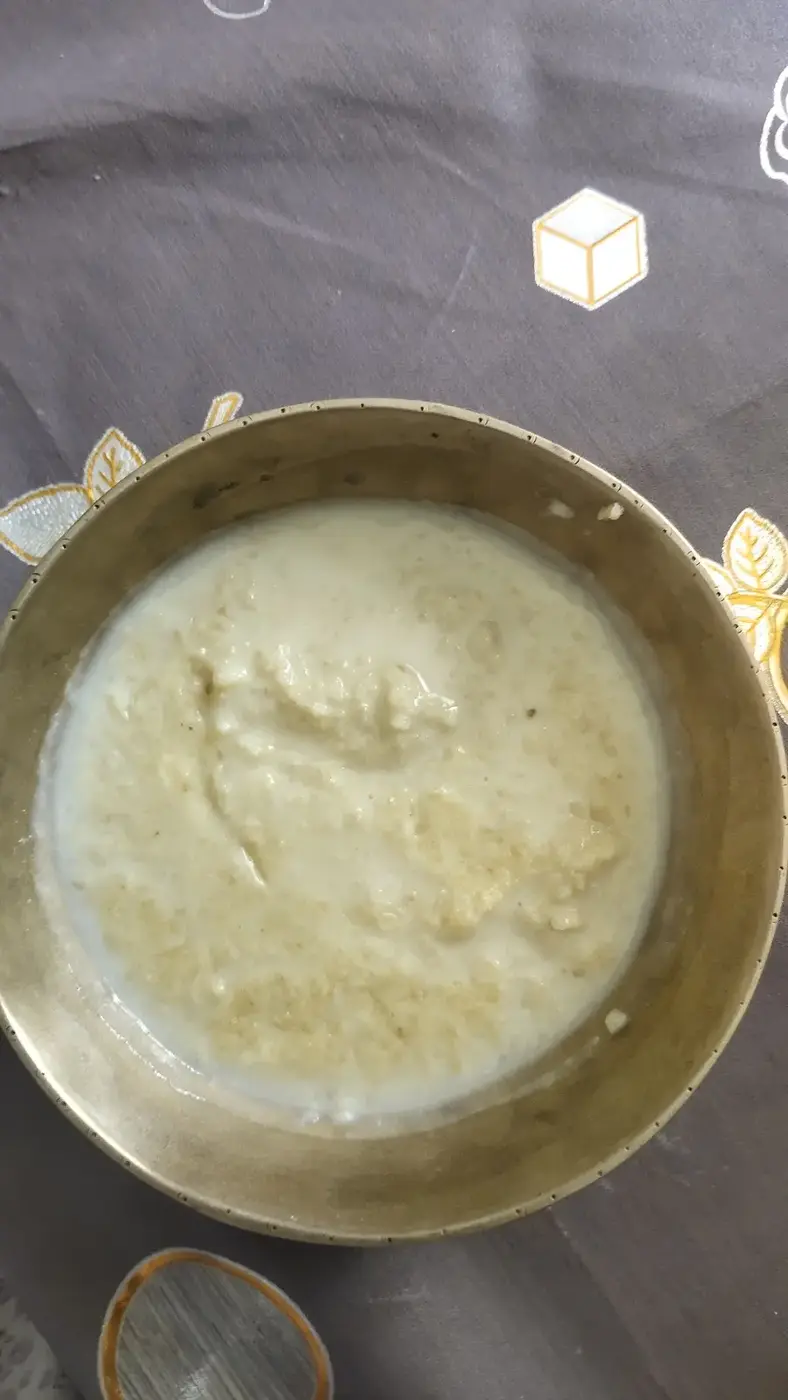
Prepared food shows how a small grain becomes part of an everyday table; the caption names the dish without presenting it as universal.
Nutrition & evidence
Foxtail millet supplies carbohydrate, protein, fibre, minerals, and varied plant compounds. Composition changes by landrace, soil, climate, storage, milling, cooking, and serving size. A grain’s nutrient profile does not establish a clinical benefit on its own.
Research trail
Last editorial review · August 2026 Read the sourcing method →
Continue exploring
