Farmers in the Andes were shaping domesticated quinoa; exact dates and pathways remain under study.
Heritage profile · 03Central Andes
Quinoa
Chenopodium quinoa
ATLAS PLATE 03
FamilyAmaranthaceaeFormAnnual seed crop · pseudocerealNative rangeEcuador to northwestern ArgentinaCollectionDG–QN–003
The grain at a glance
“A small seed carrying the knowledge of high mountains.”
OriginCentral AndesKnown forExceptional ecological diversityUsed asSoups, porridges, flour, toasted grain, drinks
01
Origin & landscape
Raised between
sky and salt.
Quinoa was domesticated in the Andes, where farmers developed distinct populations for high plateaus, inter-Andean valleys, salt-flat margins, and coastal environments. The Lake Titicaca basin is central to its long history, but quinoa belongs to a wider Andean landscape.
Its story is not one moment of invention. It is the accumulated work of Indigenous farmers who selected, exchanged, prepared, and conserved a remarkably varied crop across generations.
Language atlas
One seed,
many names.
Names move across Quechua, Aymara, Spanish, and international usage. Spellings are guides, not substitutes for the voices and pronunciation of particular communities.
01
Quinua
Spanish usage across the Andes
02
Kinwa
Quechua name · spelling varies by community
03
Jupha
Aymara name · Lake Titicaca region
04
Quinoa
International English spelling
A working chronology
Quinoa became part of diverse highland farming systems, ritual life, exchange, and daily food.
Indigenous Andean communities continue to maintain varieties adapted to highlands, valleys, and salt flats.
Living foodways
Washed,
toasted, shared.
Traditional preparation often begins by washing or otherwise processing the seed to reduce its naturally bitter surface saponins. Across the Andes, quinoa enters soups, porridges, breads, toasted preparations, sweets, and fermented drinks.
Pesque
A soft, comforting quinoa preparation of the Peruvian and Bolivian highlands, with recipes varying by household and region.
Soups
Whole quinoa thickens broths alongside tubers, vegetables, herbs, and other ingredients of local agricultural systems.
Toasted & milled
Seeds may be toasted, ground into flour, or prepared in drinks and breads—techniques with many local expressions.
Material witness
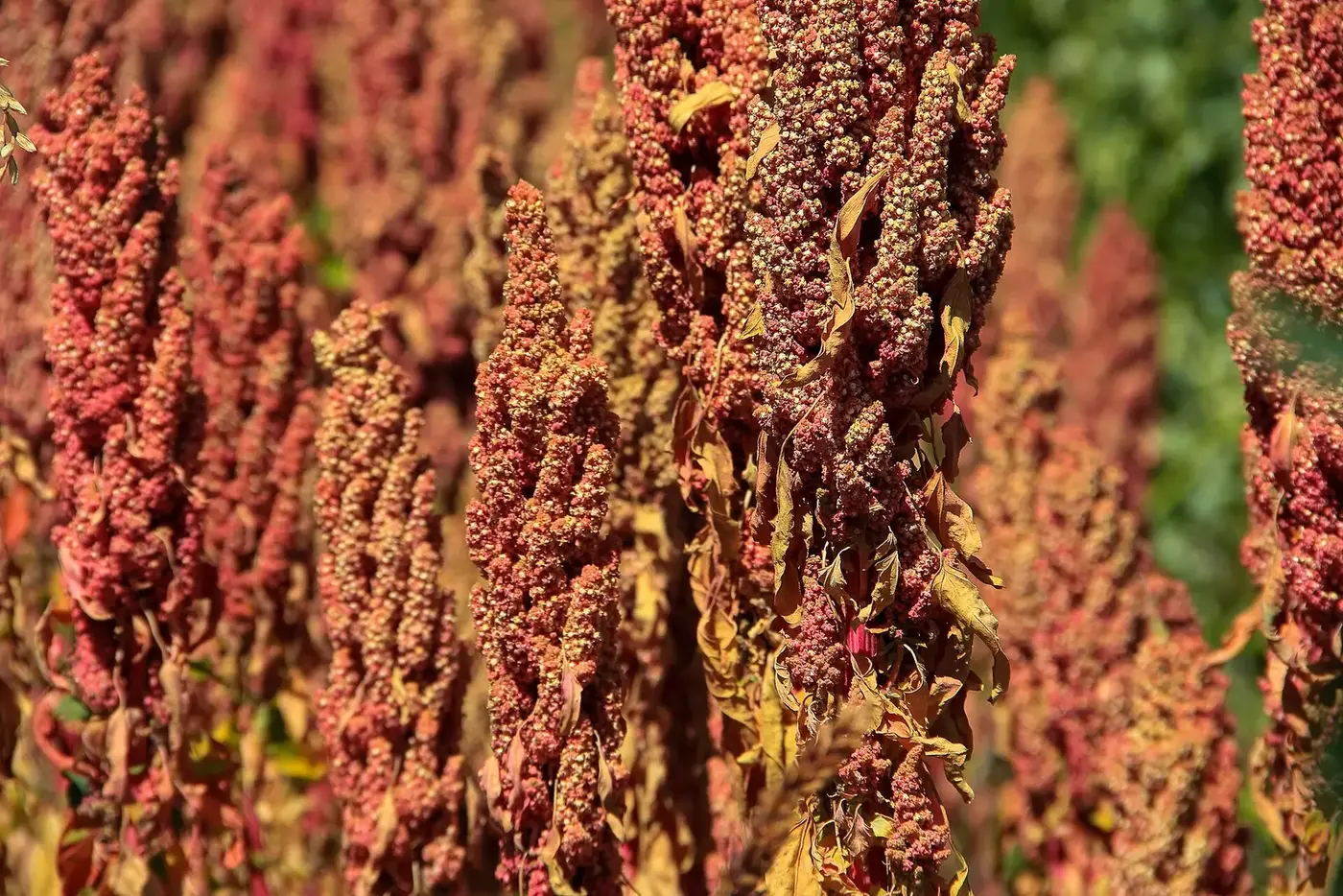
Field,
grain, table.
Photography locates quinoa in a particular Andean waterscape; it is one field, not a stand-in for every community or growing system.

Nutrition & evidence
Composition,
not miracle.
Quinoa is a naturally gluten-free seed eaten much like a cereal. It supplies protein, starch, fibre, minerals, and other compounds, but values change with variety, growing conditions, processing, and preparation. Rinsing, cooking, and serving context all matter.
Editorial standardDivineGrains does not call quinoa a cure or a “perfect food.” People with coeliac disease should choose products protected from gluten cross-contact.
Research notes
Sources behind
the story.
- Kew Science — Plants of the World Online ↗Accepted taxonomy, annual life form, and native geographic range for Chenopodium quinoa.
- FAO — Quinoa: an ancient crop to contribute to world food security ↗Andean cultivation history, crop diversity, traditional knowledge, uses, and composition.
- FAO — International Year of Quinoa archive ↗Traditional roasting, milling, soups, cereal preparations, and fermented drinks in Andean foodways.
- International Potato Center — Andean crop heritage ↗Lake Titicaca domestication context, high-altitude adaptation, and the diversity maintained by farmers.
Continue exploring