Archaeobotanical and genetic research places domestication in West Africa; dates and pathways remain active areas of study.
Heritage profile · 05West Africa
Pearl
Millet
Cenchrus americanus · syn. Pennisetum glaucum
ATLAS PLATE 05
FamilyPoaceaeFormAnnual cereal grassNative rangeBenin to southern tropical AfricaCollectionDG–PM–005
The grain at a glance
“A dense seed head shaped beside the Sahara—and carried far beyond it.”
OriginWest AfricaKnown forShort rainy seasons and hot drylandsUsed asPorridges, flatbreads, steamed grain, drinks
01
Origin & landscape
Selected at the
desert’s edge.
Pearl millet was domesticated in West Africa from wild populations adapted to seasonally dry tropical landscapes. Current genetic and archaeobotanical evidence suggests a long process roughly four to five thousand years ago rather than one fixed date.
Farmers selected plants for compact, non-shattering seed heads, maturity, grain qualities, and performance under varied rainfall. The crop later traveled east across Africa and into South Asia, where generations of growers continued to reshape it.
Language atlas
Many names,
many millets.
“Millet” is not one crop, and local names do not map neatly onto modern borders. These names are starting points toward specific languages, varieties, dishes, and farming systems.
01
Pearl millet
English common name · referring to the rounded grain
02
Bajra / Bajri
Widely used across western and northern South Asia
03
Gero
A Hausa name used in parts of West Africa
04
Souna
A regional name associated with Senegal and nearby areas
A working chronology
Pearl millet moved eastward across Africa and into the Indian subcontinent, where farmers shaped new landraces and food traditions.
Across the Sahel and South Asia, households grow pearl millet for grain, fodder, short rainy seasons, and locally valued tastes and textures.
Living foodways
Pounded,
steamed, shared.
Pearl millet can be decorticated, milled, cooked into porridge, steamed as granules, fermented, or shaped into unleavened breads. Every method depends on local varieties, tools, water, time, and the knowledge of cooks.
Porridges & tô
Flour becomes thin breakfast gruels or thicker staples served with sauces across West African food traditions.
Steamed grain
Hand-formed granules and couscous-like preparations turn millet flour into distinct textures for shared meals.
Bajra roti
Across western India, freshly milled pearl millet flour is shaped into flatbreads, often eaten with pulses, vegetables, dairy, or chutneys.
Material witness
Field,
grain, table.
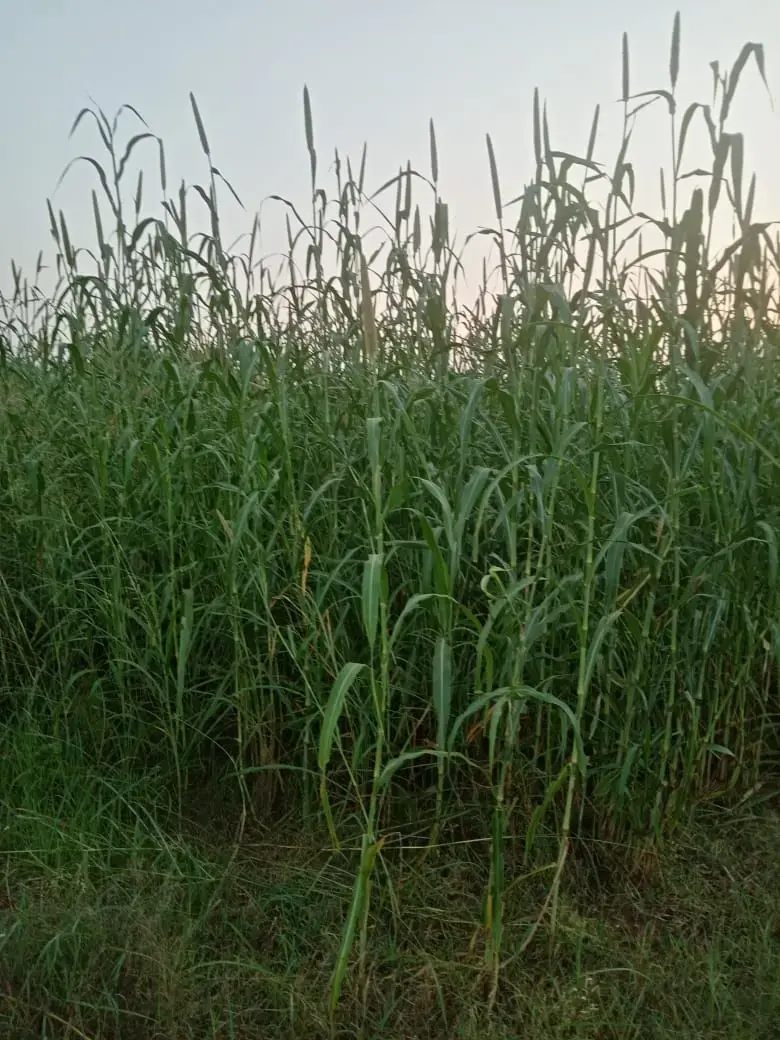
A specific field view makes the crop's cylindrical heads and dryland setting legible without suggesting a single universal millet landscape.
.jpg)
Nutrition & evidence
Whole grain,
whole context.
Pearl millet supplies starch, protein, fibre, minerals, and varied plant compounds. Values change with cultivar, soil, milling, storage, fermentation, and cooking. A food’s nutritional contribution also depends on portion, preparation, and the rest of the meal.
Editorial standardDivineGrains does not turn drought adaptation, iron content, or traditional use into a promise of a health outcome. Nutrition claims require a defined food form, serving, and reliable analysis.
Research notes
Sources behind
the story.
- Kew Science — Plants of the World Online ↗Accepted taxonomy, annual life form, seasonally dry tropical biome, uses, and native range for Cenchrus americanus.
- ICRISAT — Crops that feed the world: Pearl Millet ↗Dryland cultivation, grain and fodder roles, food forms, and cautious nutrition context.
- Frontiers in Plant Science — Pearl millet domestication and drought breeding ↗Evidence for West African domestication roughly 4,000–5,000 years ago and crop adaptation research.
- FAO — Millet utilization ↗Food uses and the importance of millet across drier regions of Africa and Asia.
Continue exploring