Cultivation becomes established in eastern Africa.
Heritage profile · 01East Africa → South Asia
Finger
Millet
Eleusine coracana
ATLAS PLATE 01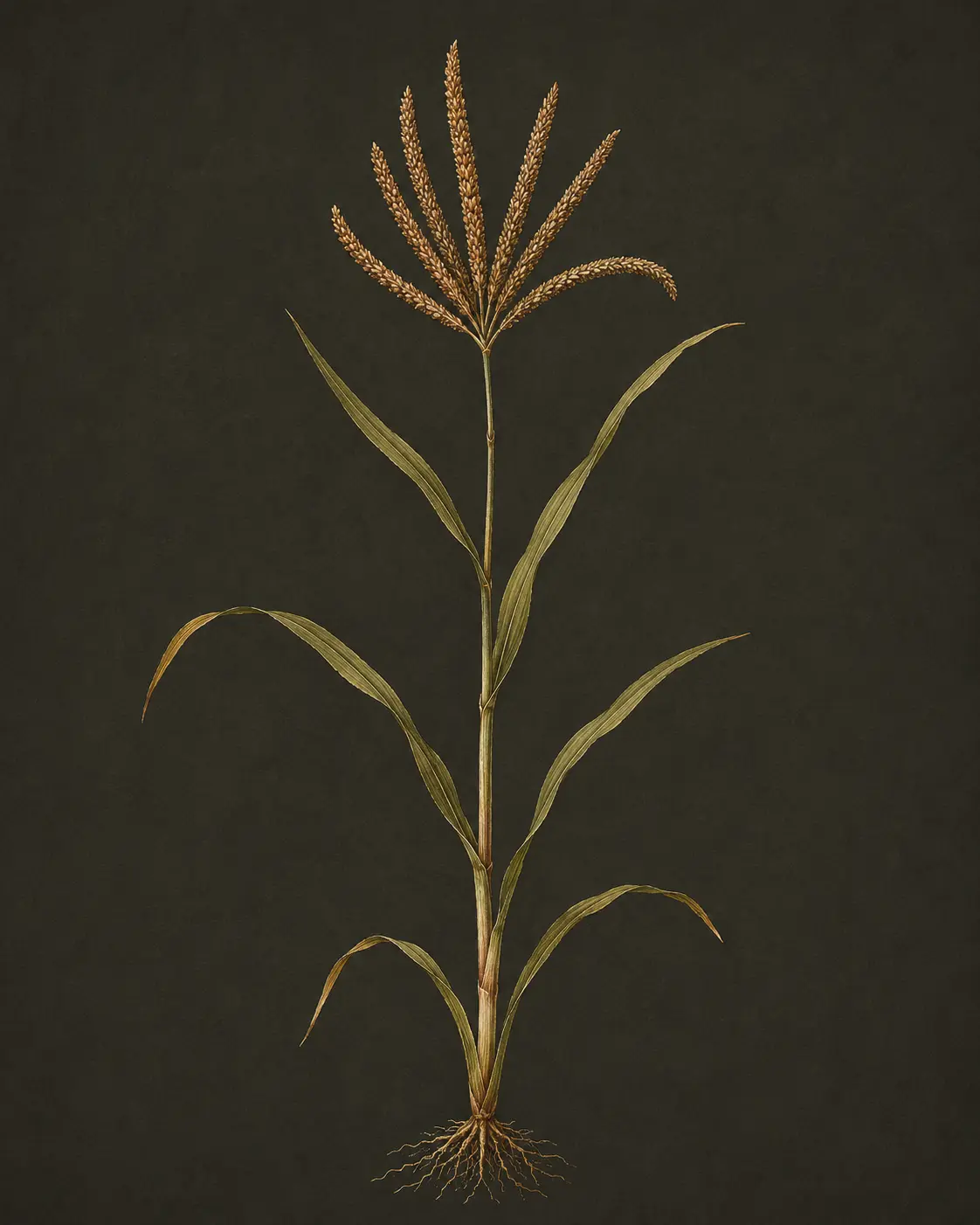
FamilyPoaceaeFormAnnual cerealPrimary diversityEastern Africa
The grain at a glance
“A small-seeded cereal with an extraordinary geographical memory.”
OriginEastern AfricaKnown forResilience in rain-fed systemsUsed asPorridge, bread, beverages
01
Origin & journey
Born in Africa.
Replanted across an ocean.
Finger millet was domesticated in eastern Africa and later became deeply rooted in the farming and food traditions of South Asia. Its history is not a single straight line, but a long exchange among landscapes, growers, languages, and kitchens.
Because archaeological dates and migration routes continue to be refined, DivineGrains presents chronology as an evidence-led range rather than a fixed origin myth.
Language atlas
One grain,
many names.
Names reveal where a crop has taken root. Spellings and usage vary by language, region, and community; this list is an invitation to listen more closely.
01
Ragi
Kannada · Telugu · widely used in India
02
Mandua
Hindi · Uttarakhand and northern India
03
Wimbi
Swahili · eastern Africa
04
Tamba
Hausa · parts of West Africa
A working chronology
Finger millet appears in archaeological contexts in the Indian subcontinent.
The crop remains important across rain-fed landscapes in Africa and South Asia.
Living foodways
Ground, fermented,
steamed, shared.
Finger millet persists because communities continually remake it: as soft porridge and firm ugali, as roti and mudde, in malted drinks, and in foods connected to care, labor, celebration, and season.
East Africa
Porridges, stiff preparations, and fermented or malted beverages.
South India
Ragi mudde, dosa, roti, malted drinks, and contemporary baked foods.
Himalayan regions
Flatbreads, porridges, and local fermented traditions shaped by altitude and season.
Material witness
Field,
flour, meal.
Photography enters the profile where it can document a specific place, crop form, or preparation. It does not stand in for every finger millet landscape or food tradition.
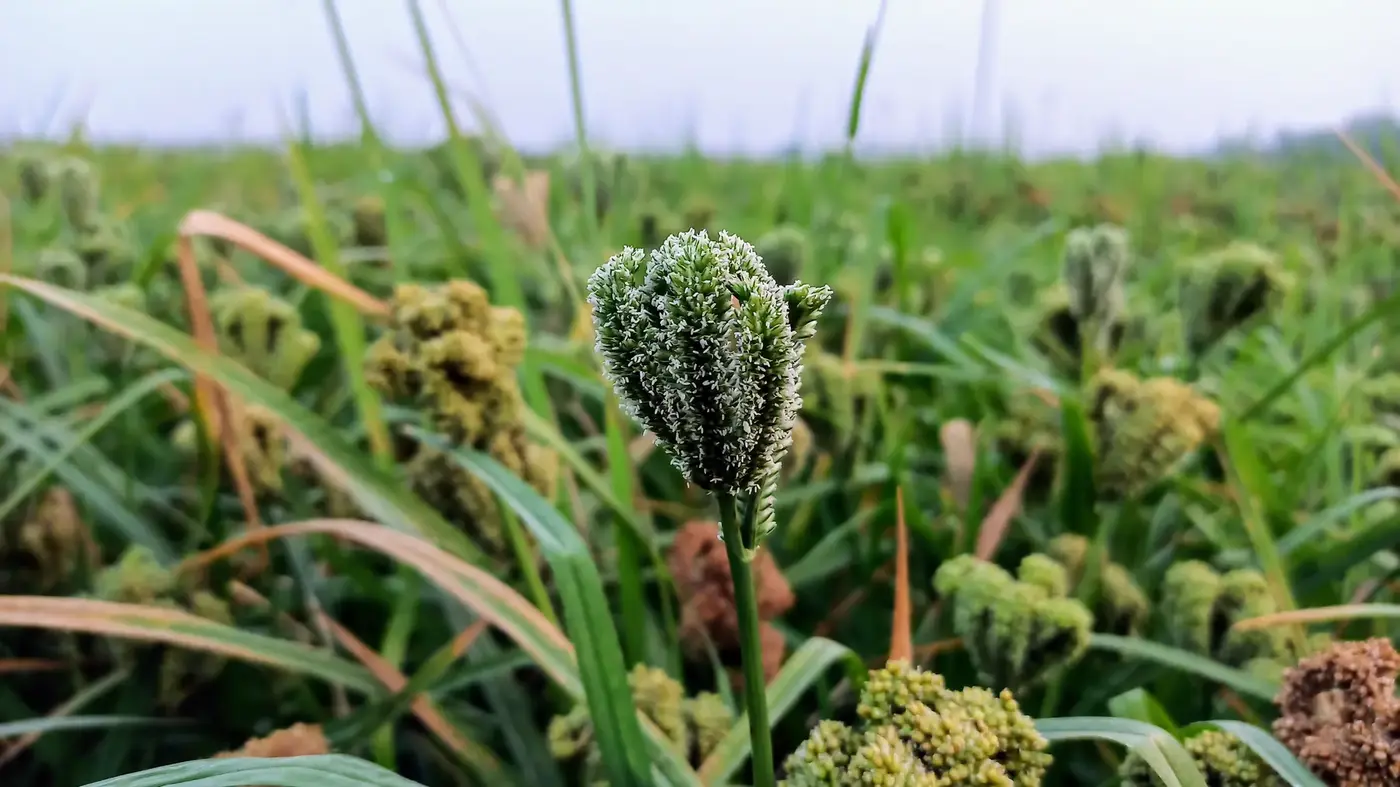

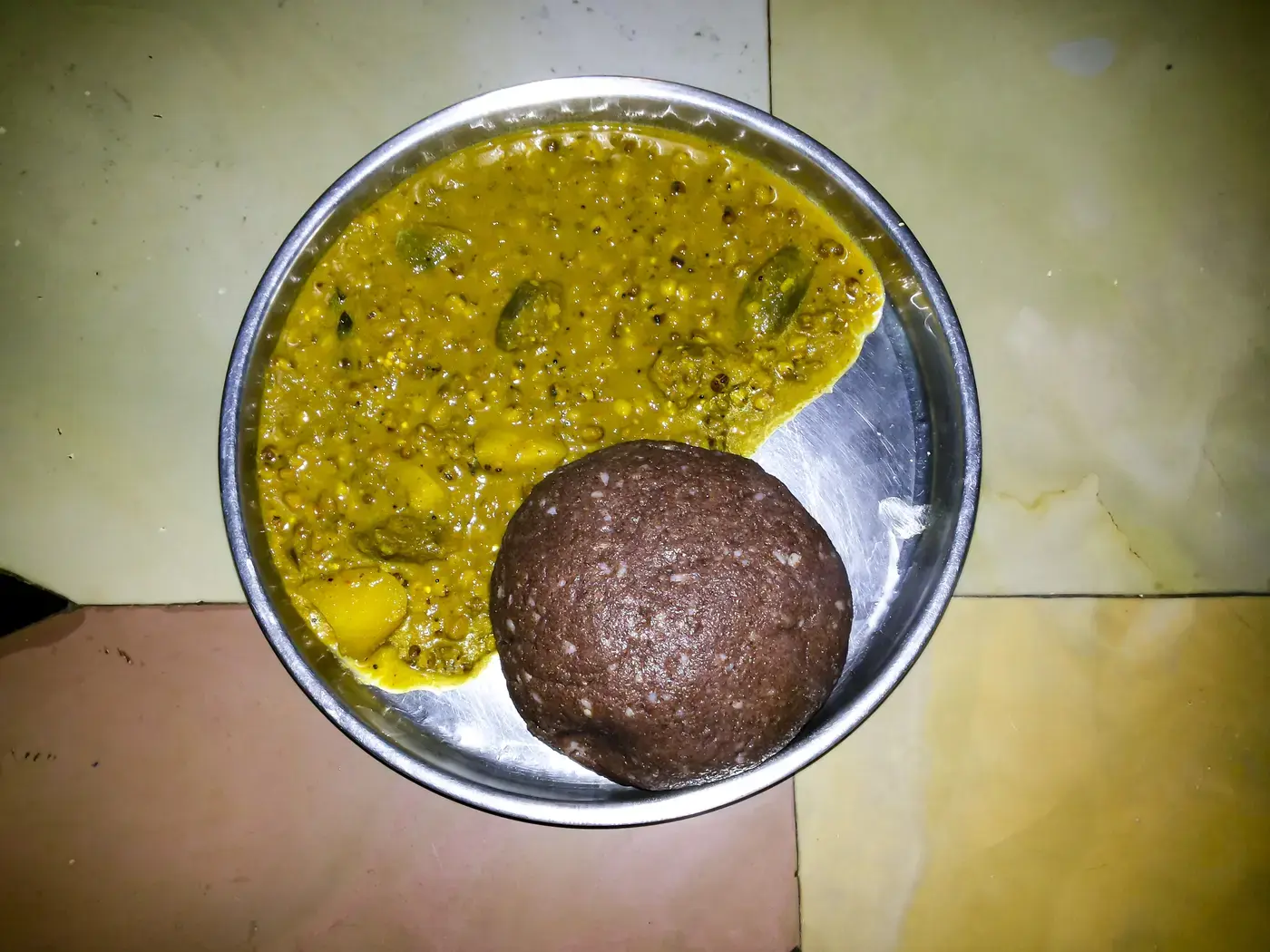
_specialitate_made_of_red_finger_millet_called_Ragi_mudde_with_pulses_gravy.jpg)
Nutrition & evidence
Read the grain.
Read the claim.
Finger millet is commonly noted for calcium and dietary fiber, but composition varies by variety, soil, processing, and preparation. DivineGrains does not turn a nutrient into a cure: nutrition statements should be read in the context of the whole diet.
Editorial standardSpecific health claims require direct, high-quality evidence. Traditional use is identified as tradition—not presented as clinical proof.
Research notes
Sources behind
the story.
- Kew Science — Plants of the World OnlineAccepted taxonomy and geographic distribution for Eleusine coracana.
- FAO — Traditional CropsCrop context, cultivation, food uses, and agricultural significance.
- Archaeobotanical literatureDomestication history and evidence for movement between Africa and South Asia; dates remain under review.
- National food-composition databasesNutrient values should be tied to the named sample, preparation, and database edition.
- Image provenanceDocumentary photographs retain named creators, locations, source links, and licenses. Cropping is disclosed in each caption.
Continue exploring